Zero-Coupon Bond Yield Explained: How to Calculate and Analyze Your Returns

A complete guide to understanding the yield on zero-coupon bonds and how to calculate it accurately.

What Is a Zero-Coupon Bond?

A zero-coupon bond is a type of fixed-income investment that doesn’t pay periodic interest (also called coupons).
Instead, investors purchase it at a discounted price and receive the full face value at maturity.

For example, if you buy a zero-coupon bond for $750 and it matures at $1,000 after 10 years, the $250 difference represents your total profit — the bond’s yield.

This structure makes zero-coupon bonds particularly attractive for long-term investors who want predictable growth without the need for regular interest payments.

How to Calculate YTM of zero-coupon bond

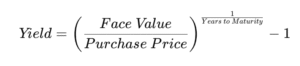
The yield of a zero-coupon bond is determined by comparing the purchase price, face value, and time to maturity.
The standard formula is:
Let’s say:

  • Face Value = $1,000

  • Purchase Price = $750

  • Years to Maturity = 10

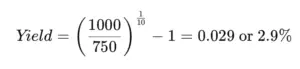
Then:

That means the annualized yield is 2.9% per year over the 10-year period.

Tip: Manually calculating this can get complicated — especially if you compare multiple bonds.

That’s why we built a dedicated tool to make it effortless.

Try it here: Zero-Coupon Bond Yield Calculator

Why Do Investors Choose Zero-Coupon Bonds?

Zero-coupon bonds have unique advantages that appeal to certain investors:

  • Predictable returns — you know exactly how much you’ll receive at maturity.

  • No reinvestment risk — since there are no coupon payments to reinvest.

  • Tax deferral potential — in some cases, you can delay taxes on gains until redemption.

  • Useful for long-term goals — like saving for education or retirement.

However, they also come with some risks — mainly interest rate risk and lower liquidity compared to traditional bonds.

Factors That Affect Zero-Coupon Bond Yields

  • Interest Rates:
    When market rates rise, existing bond prices fall, which can lower your yield if sold early.

  • Credit Quality:
    Bonds issued by governments are safer but offer lower yields. Corporate bonds may pay more but carry credit risk.

  • Time to Maturity:
    Longer maturities usually mean higher yields — but also greater sensitivity to interest rate changes.

  • Market Conditions:
    Economic outlook and inflation expectations play a big role in determining bond yields.

Use Our Zero-Coupon Bond Yield Calculator

  • Instead of crunching numbers manually, use our free online calculator to quickly find your bond’s yield.
    Just enter:

    • The bond’s face value

    • The purchase price

    • The number of years to maturity

    In seconds, you’ll see your annualized yield and can compare results for multiple bonds.

    Access it now: Zero-Coupon Bond Yield Calculator

Bottom line

Zero-coupon bonds offer a clear and predictable way to grow your wealth over time.

By understanding how their yield works — and using tools like the Zero-Coupon Bond Yield Calculator — you can make smarter investment decisions and plan your portfolio with confidence.


FAQ

They offer fixed, predictable returns with no reinvestment risk since there are no periodic interest payments.

Government-issued zero-coupon bonds are relatively safe, but all bonds carry some level of market and interest rate risk.

Use the Zero-Coupon Bond Yield Calculator to instantly compute your annualized yield.